
Blogs
Leather Bomber Jacket: History, Styles and How to Wear It
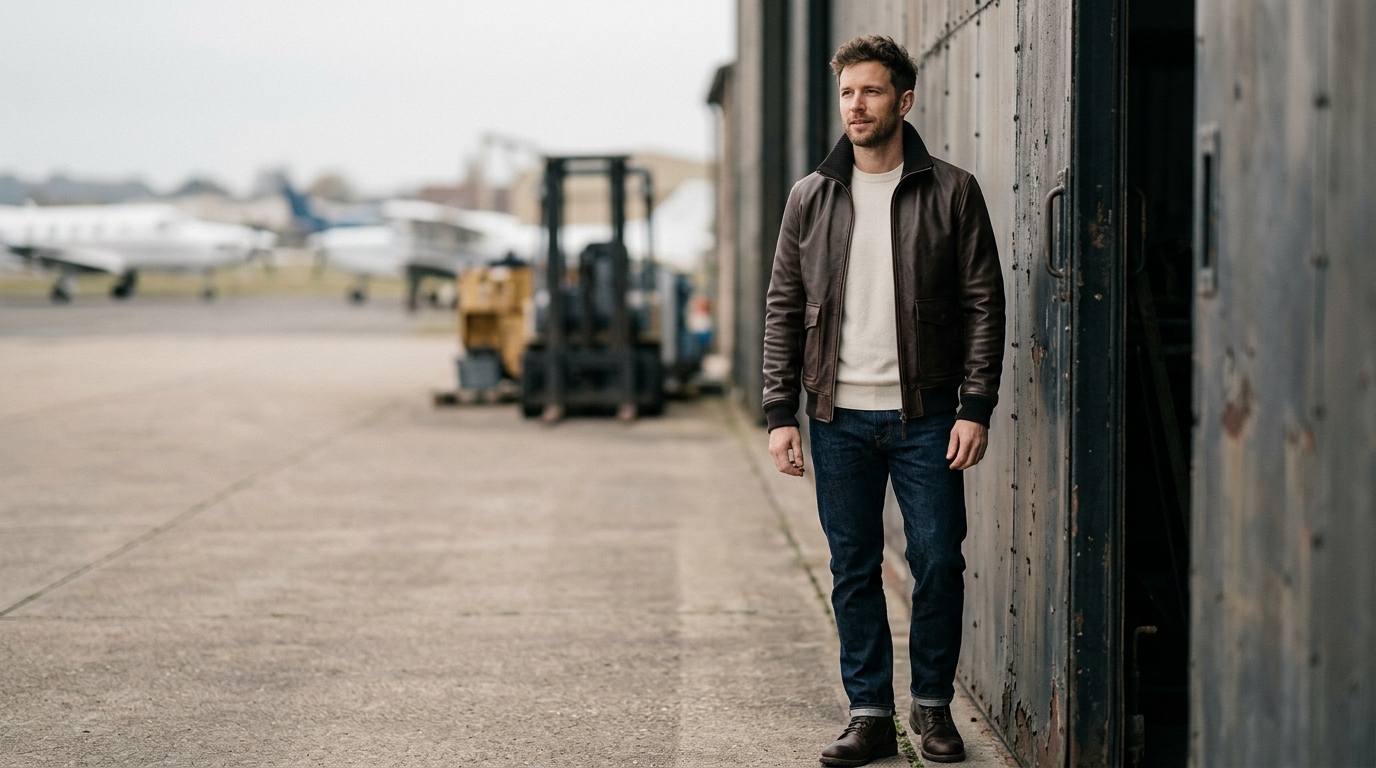
Very few garments can claim a genuine military service record, and fewer still have made the journey from unheated cockpits to the high street without losing anything along the way. The leather bomber jacket has done both. It is warm, it is forgiving, it suits people who find a biker too sharp and a parka too shapeless, and at Shop Leather Jackets it is consistently the style people come back for once they have owned one.
Where the Bomber Jacket Came From
The shape was engineered before it was styled, which is why it still works. Every detail on a modern bomber started life solving a problem at altitude.
The A-1 and A-2
Early aircraft had open cockpits and no heating. Aircrew needed something windproof, short enough not to bunch when seated and snug at the wrists and waist so cold air could not get in. The A-1 answered that in the late 1920s with a buttoned front and knitted collar. In 1931 the design was revised: the buttons became a zip and the knitted collar became a leather one. The Smithsonian’s National Air and Space Museum holds examples of the resulting Type A-2 flying jacket, the jacket most people picture when they hear the word bomber, right down to the ribbed cuffs and hem.
The Irvin and the sheepskin route
Britain took a different approach. Leslie Irvin’s thermally insulated flying jacket used heavyweight sheepskin with the wool turned inwards, a wide collar that could be buckled across the throat and a belted waist. It was bulkier than the A-2 but far warmer, which mattered for long night operations over Europe. The RAF Museum’s collection includes an original 1940 Irvin jacket worn by a Battle of Britain pilot. That sheepskin lineage is still visible in every mens shearling jacket with a folded collar and a heavy wool lining.
From cockpit to wardrobe
Demobilised aircrew kept their jackets, and the shape drifted into civilian life through the 1950s and 1960s. By the time it reached British high streets it had shed the patches and the squadron markings but kept the proportions. That is the reason the bomber jacket reads as familiar even to people with no interest in aviation history at all. The silhouette has been in continuous use for close to a century.
One point of confusion is worth clearing up. The nylon MA-1, with its bright orange lining and slim sleeve, is also called a bomber, and it descends from the same military programme. It is not a leather garment though, and it behaves completely differently: lighter, less warm, and with none of the patina that leather develops over years of wear. When people talk about a leather bomber they mean the older lineage, built from hide rather than synthetic fabric, and that is the version that improves rather than degrades with use.

The Main Bomber Styles
Bomber is a family rather than a single design. Knowing which branch you are looking at makes shopping much faster.
The classic ribbed bomber
Straight body, ribbed collar, ribbed cuffs and a ribbed hem that sits at the hip bone. The zip runs centrally, the pockets are usually slanted or set into the side seam, and the whole thing is designed to be worn open or closed with equal ease. This is the most versatile version and the safest first purchase. A black cowhide bomber in this cut is about as close to a default as outerwear gets.
Shearling and B-3 types
The heavy end of the family. Sheepskin outer, wool lining, oversized collar, often with buckled straps at the throat. These are genuinely warm rather than decoratively warm, which makes them the right choice for winter rather than autumn. A B-3 shearling bomber is a commitment in terms of volume, so it works best over slim layers. The women’s equivalent sits in the shearling jacket women range, generally cut with less bulk through the shoulder.
Hooded and removable-hood bombers
A modern addition rather than a historic one, and a practical one in the British climate. A detachable hood turns a single jacket into two, and the removable hood styles let you drop the aviation reference entirely and wear the piece as everyday outerwear. Options like the camel brown hooded bomber or the olive green version work for anyone who wants leather without formality. The off-white hooded bomber does the same job in a lighter palette.
Collar variations
The collar changes the character more than any other single detail. A ribbed knit collar is the most casual. A fur collar adds warmth and a heavier, more vintage feel, as on the cognac fur collar bomber. A shirt collar, as on the brown shirt collar bomber, reads softer and slightly smarter, and layers more comfortably under a scarf.
Leather, Lining and Build Quality
Hide choice sets the tone. Cowhide is the toughest and holds a defined shape, which suits a structured bomber body. Lambskin is softer, lighter and drapes closer to the body, breaking in within a few wears. Goatskin sits between the two, with a slightly pebbled grain that hides scuffs well.
The ribbing matters more than people expect. Good knit trim recovers its shape after being stretched; poor trim goes slack within a season and the jacket loses its whole silhouette. Pull gently at a cuff and watch how quickly it returns. Check the lining too, since a full lining lets the jacket slide over knitwear rather than dragging on it, and a quilted lining adds warmth without extra outer bulk.
Zips, pockets and hardware
The main zip takes more punishment on a bomber than on any other leather jacket, because the relaxed body means it gets opened and closed constantly rather than left fastened. It should run smoothly in both directions with one hand, and the teeth should be metal rather than moulded plastic. Give the pull tab a light tug sideways: quality hardware feels weighted and slightly cool, cheap hardware feels hollow.
Pocket placement is worth a second look as well. Slanted hand pockets sit more naturally when the jacket is worn open, while horizontal pockets look cleaner when it is zipped. An internal pocket is the detail most often left out and the one most often missed later. Waxed finishes, as on the blue waxed hooded bomber, tend to develop visible wear at the pocket edges first, which some people want and others do not.
If sourcing matters to you, the leather industry runs its own environmental certification through the Leather Working Group audit standard, which rates tanneries on water use, chemical management, energy and traceability. It is a reasonable question to ask of any brand selling a real leather jacket.
How to Wear It
The bomber is forgiving in a way that most leather outerwear is not. Because the body is relaxed rather than fitted, it does not demand the rest of the outfit adapt to it.
For men
The default combination is jeans, a crew neck or plain tee, and boots or trainers. It works because the jacket carries the visual weight and nothing else has to. To dress it up, swap the tee for a fine merino roll neck and the jeans for dark wool trousers. A mens bomber jacket in a smooth black or dark brown finish handles this smarter register comfortably, while distressed and waxed finishes stay firmly casual.
The one thing to avoid is layering it over anything long. A bomber ends at the hip, so a shirt or jumper hanging below the hem breaks the line and makes the torso look shorter.
For women
The relaxed body is the whole point. Worn over a slip dress or a midi skirt it creates a deliberate contrast between soft and structural. Over high-waisted jeans it keeps the waist visible and the leg long. A bomber jacket women can wear straight over a jumper is genuinely useful in autumn, since there is no pulling across the back, which is where fitted styles usually fail. The tall black hooded bomber adds length through the body and sleeve for anyone who finds standard cuts too short.
Quick rule. Bomber over something fitted, biker over something flowing. Get that the right way round and almost any combination works.
Colour
Black is the most adaptable and the least demanding. Brown, cognac and camel read warmer and pair more naturally with denim, olive and cream. A black leather jacket is the obvious first buy, but a brown bomber is often the more interesting second one, and something like the maroon hooded bomber sits between neutral and statement without tipping into either.
Across the seasons
Spring and autumn are where a standard lined bomber performs best, worn over a shirt or light knit. In deep winter the ribbed hem becomes an advantage, sealing warmth in, though a shearling body is the better answer below freezing. In summer it comes out for evenings only, which is when the lighter lambskin versions earn their place.
Layering it properly
Because a bomber stops at the hip, layering runs upwards rather than downwards. A fine knit, a flannel shirt or a hooded sweatshirt all sit comfortably underneath, provided the hem of the layer finishes above the jacket hem. Anything longer creates a stepped outline that flattens the whole silhouette.
Over the top, a bomber works surprisingly well under an open longline wool coat in deep winter, which is a trick more common in menswear but equally effective in womenswear. Scarves should be tucked inside rather than looped over, since the ribbed collar sits close to the neck and a bulky scarf on top pushes it out of shape. The distressed brown hooded bomber is a good example of a body cut with enough room to layer without needing to size up.
Bomber, Biker or Racer
These three get shortlisted together constantly. Here is how they actually differ.
| Style | Body shape | Closure | Reads as |
|---|---|---|---|
| Bomber | Relaxed, ribbed hem and cuffs | Central zip | Easy and understated |
| Biker jacket | Cropped and fitted, belted waist | Asymmetric zip | Sharp and structured |
| Café racer | Slim, minimal detailing | Central zip, banded collar | Clean and minimal |
For a deeper comparison across the whole category, our guide to leather jacket styles maps every cut and colour, while the leather jacket men guide focuses on menswear specifically. If you are weighing a bomber against something sharper, the biker jacket buying guide covers that side in detail.
Fit and Sizing
Three checks settle it. The shoulder seam should sit on the edge of your shoulder, not below it. The ribbed hem should land at or just above the hip bone, never on the thigh. The cuffs should sit at the wrist with enough room to push the sleeve up slightly.
Bombers are cut with more room through the chest than bikers, so most people take their true size. Size up only if you intend to wear a thick jumper underneath as standard. Sizing down is the more common mistake, and it shows immediately in the shoulders and across the upper back when you reach forward.
Looking After It
Hang it on a broad or padded hanger so the shoulders hold their line, and keep it away from radiators and direct sunlight, both of which dry the hide out. Wipe surface marks with a barely damp cloth and let the jacket dry naturally at room temperature, never with heat.
Condition once or twice a year with a product intended for garment leather, applied thinly and buffed off. Shearling and fur trim need brushing rather than conditioning. Never machine wash any of it, and use a specialist leather cleaner rather than a standard dry cleaner for anything more than a surface mark. Store it in a breathable cotton cover over summer rather than plastic, which traps moisture against the surface. Browse the full leather jacket women range or the mens leather jackets collection when you are ready to choose.
Frequently Asked Questions
-
What is the difference between a bomber jacket and a flight jacket?
They describe the same lineage. Flight jacket is the accurate historical term for military-issue designs such as the A-2 and the Irvin, while bomber became the popular name once the style entered civilian wardrobes. Today bomber usually refers to any short jacket with a ribbed collar, cuffs and hem, whether or not it has any aviation heritage behind it.
-
Are leather bomber jackets warm enough for British winters?
A standard lined bomber handles autumn and mild winter days comfortably, particularly with a knit underneath, because the ribbed hem and cuffs stop draughts. For genuinely cold weather, a shearling or sheepskin-lined version is the better choice. The wool lining traps significantly more warmth than a quilted polyester one without adding much outer bulk.
-
Should a bomber jacket be tight or loose?
Neither extreme. The body should be relaxed enough to layer a jumper underneath without pulling across the back, while the shoulder seam still sits on your shoulder bone. The ribbed hem should rest at the hip and grip lightly rather than squeeze. If the hem rides up when you raise your arms, the jacket is too small.
-
Can you wear a leather bomber jacket to the office?
In most modern workplaces, yes. Choose a smooth black or dark brown finish rather than a distressed or waxed one, avoid heavy hardware and visible patches, and pair it with wool trousers and a knit or shirt. The ribbed trim keeps it informal, so it suits business casual settings rather than formal ones.
-
How do I tell if a bomber jacket is real leather?
Real leather has an irregular grain, warms to the touch and creases softly rather than folding sharply. Cut edges look fibrous rather than uniform, and the smell is distinctive. Listings should name the hide, such as cowhide, lambskin or sheepskin, rather than using vague wording. Our FAQs page covers materials in more detail.
-
Do bomber jackets suit everyone?
Broadly, yes, though proportion matters. Shorter frames are best served by a hem that sits at the natural waist rather than lower. Taller frames need a longer body so the ribbing does not ride up. Broader builds usually suit a straight body with minimal ribbing, while slimmer builds can carry the more voluminous shearling shapes.
-
How long does delivery take and can I return it?
Orders are dispatched within seven business days, with total delivery typically taking ten to fourteen business days across the UK and our selected EU markets. Full details are set out in our shipping policy. You have fourteen days from receipt to change your mind under the Consumer Contracts Regulations, and the process is explained in our returns policy.
Buy the one you will wear on an ordinary Wednesday, not the one that only works in photographs.