
Blogs
Women With a Leather Jacket: The Complete Style and Buying Guide
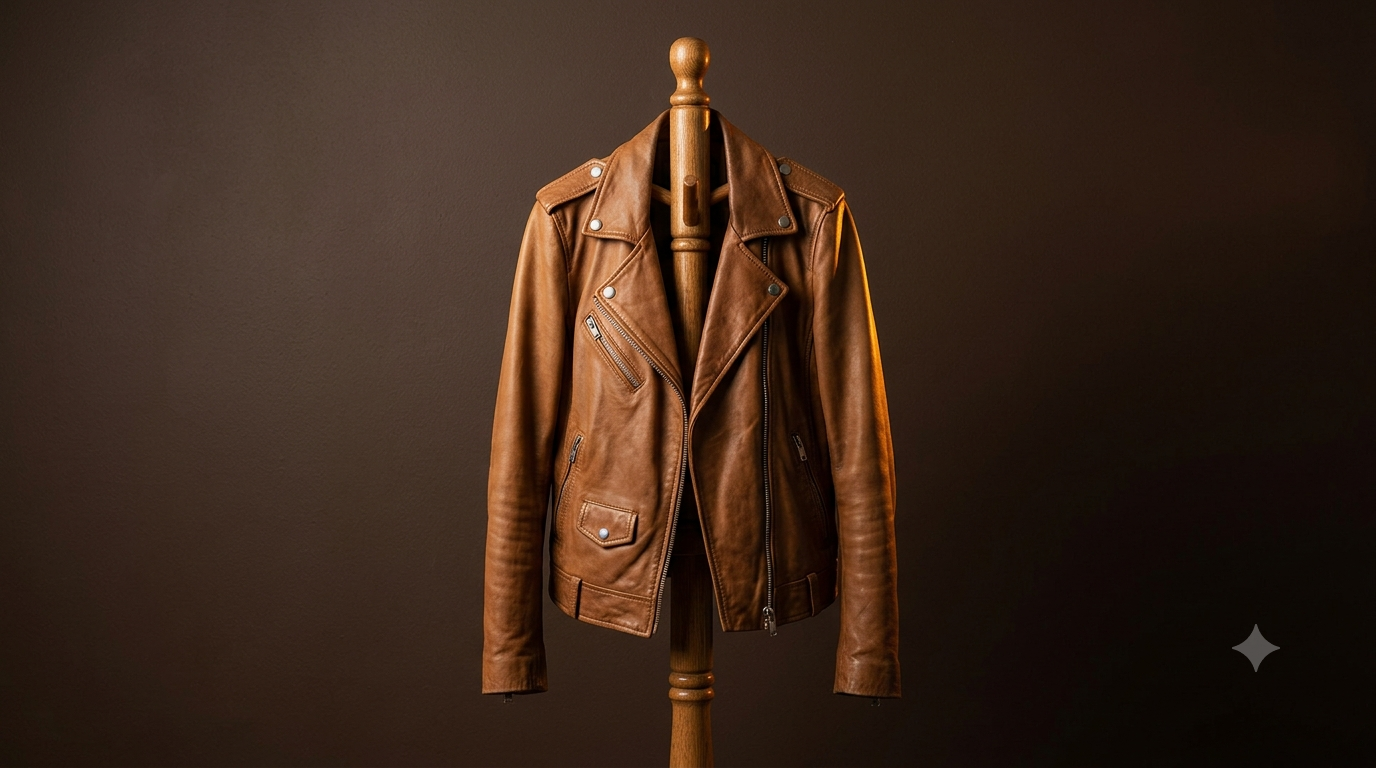
There’s a particular kind of confidence that comes with a leather jacket women reach for without thinking twice, the one that finishes an outfit rather than fighting it. It works over a dress for evenings out, over a jumper for the school run, and over tailoring when jeans alone won’t quite do. At Shop Leather Jackets, the full womens leather jacket range covers biker, bomber, shearling, slim-fit, petite and tall cuts, which means the real decision isn’t whether to buy one, it’s which shape actually suits you. This guide walks through the styles, fits and finishes worth knowing before you commit.
What Makes a Woman With a Leather Jacket Look Put Together
The difference between a leather jacket that elevates an outfit and one that just sits there usually comes down to proportion, not price. A jacket cut too boxy for your frame adds bulk in the wrong places. One cut too cropped can look like it belongs to someone else’s wardrobe. Getting the silhouette right, before you even think about colour or hardware, is what makes a jacket look intentional rather than borrowed.
The good news is that leather jackets are unusually forgiving once you know your shape. A structured biker jacket nips in at the waist and works on almost any body type, while a longer bomber or coat-length shearling suits anyone who prefers coverage over a fitted silhouette. There’s no single “right” cut, only the one that matches how you actually want to look and move.
Womens Leather Jacket Styles: The Core Options
Biker Jackets
The biker jacket remains the most reached-for silhouette in womenswear, and for good reason. Its fitted waist, structured shoulder and asymmetric zip create shape without needing a belt or tailoring underneath. It moved from motorcycle gear into mainstream fashion decades ago, and London’s Victoria and Albert Museum holds pieces from designers like Vivienne Westwood that trace exactly how that shift happened through the punk era and beyond. The womens biker jacket range covers both cropped and longer-line versions.
Bomber Jackets
Where the biker jacket adds edge, the bomber softens it. The relaxed body and ribbed hem make it easy to wear over a jumper without anything pulling across the shoulders, and it reads as effortless rather than dressed-up. It’s a strong choice for anyone who finds a fitted biker jacket too structured for everyday wear. Browse the womens bomber jacket collection for both cropped and slightly longer options.
Shearling Jackets
For real cold, nothing in leather outerwear beats shearling. The natural wool lining traps warmth far more effectively than a synthetic liner, which is why it’s the practical choice for genuinely low temperatures rather than a purely aesthetic one. It runs bulkier than a biker or bomber, so it suits outdoor days and proper winter commutes more than mild autumn evenings. The womens shearling jacket range includes both cropped and coat-length options.
Slim-Fit Jackets
For a closer, more tailored silhouette, a slim-fit cut sits tighter through the body and arms than a standard biker jacket, giving it a sleeker line under coats or over fitted knitwear. The slim fit jacket range is worth trying if a regular fit has ever felt slightly loose through the waist.
Petite and Tall Fits
Standard sizing rarely accounts for height at either end of the scale. A petite jacket shortens the body and sleeve proportionally rather than simply sizing down, which keeps the silhouette balanced instead of swamping a smaller frame. At the other end, a tall fit jacket extends sleeve and body length without widening the shoulders, so the fit stays proportionate rather than boxy.
Quick Comparison
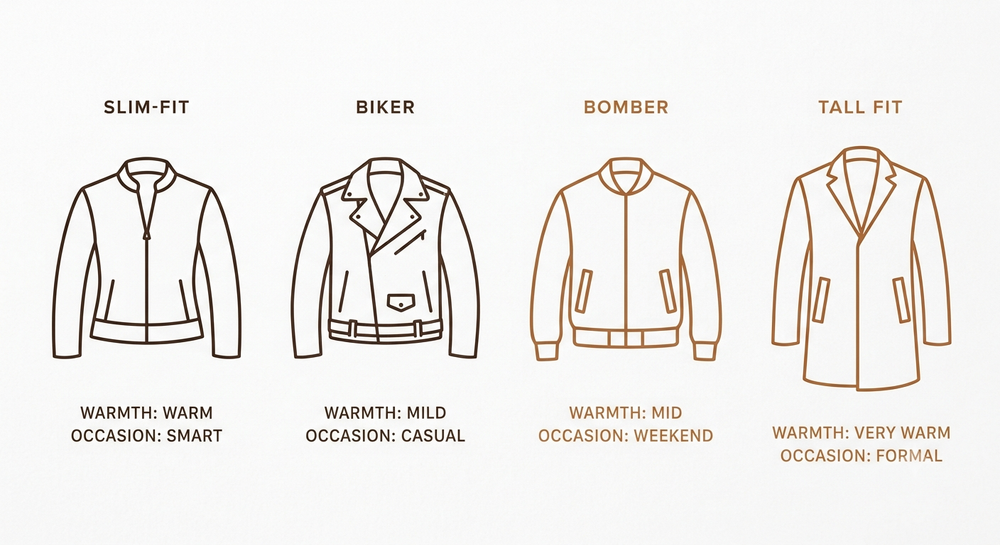
| Style | Best For | Warmth | Typical Fit |
|---|---|---|---|
| Biker | Everyday, evenings, layering | Moderate | Fitted, structured waist |
| Bomber | Casual, relaxed layering | Moderate | Roomier, straight hem |
| Shearling | Cold-weather wear | High | Bulkier, insulated |
| Slim-fit | Tailored, under coats | Moderate | Close through body and arms |
| Petite / Tall | Height-specific proportions | Varies by base style | Adjusted length only |
If you’re comparing every cut side by side, including how the same silhouettes translate for men, the leather jacket styles guide covers the full picture. For colder climates where a jacket alone won’t be enough, the womens leather coat range extends the same craftsmanship into a longer, warmer silhouette.
Stylish Jackets for Women: How to Wear Yours Well
A leather jacket is one of the few pieces that works equally well dressed up or down, which is exactly why it earns its place as a wardrobe staple rather than a seasonal buy.
- Over a dress: a fitted biker jacket cuts the sweetness of a floral or slip dress without hiding it, particularly with ankle boots.
- Over tailoring: a slim-fit jacket layers cleanly under a longer coat or over wide-leg trousers for a smart-casual look that isn’t quite office wear and isn’t quite off-duty either.
- Over knitwear: a bomber jacket sits comfortably over a chunky jumper without adding bulk at the shoulder, making it a strong cold-weather layering piece.
- With denim: the classic pairing still works because the structure of the jacket balances the softness of denim, whatever wash or cut you’re wearing.
Colour: Why Black Still Wins, and When Brown Works Harder
Black remains the most practical first purchase because it pairs with almost everything already in your wardrobe and hides light wear better than lighter tones. Brown is the natural second jacket, since it softens the same silhouette and works particularly well against cream, olive and warm neutrals. Beyond those two, a considered colour like burgundy or tan can work as a third piece once the fundamentals are covered, but it’s worth building the wardrobe in that order rather than starting with a shade you’ll wear less often.
Leather Types: What Lambskin and Cowhide Actually Mean for Fit
Lambskin is soft from the first wear, lightweight, and drapes close to the body, which is why it’s the standard choice for fitted biker and slim-fit cuts. It moves well and feels comfortable almost immediately, though it shows scuffs slightly more easily than a heavier hide.
Cowhide is thicker and more structured, taking longer to soften but rewarding that patience with greater durability over time. It’s a common choice for shearling and heavier outerwear built to withstand repeated wear through a full winter.
Neither is better in absolute terms. The right choice depends on whether you want a jacket that feels broken in straight away or one that develops character gradually.
Building a Small Wardrobe Around One Jacket
Buying one well-chosen leather jacket does more for a wardrobe than buying three mediocre ones. A black biker jacket in a mid-weight lambskin covers evenings, weekends and most workwear that isn’t strictly formal, which makes it the obvious starting point if you’re building from scratch. From there, a second piece earns its place by covering a gap the first one doesn’t, rather than duplicating it. A shearling covers the cold months a biker can’t, a slim-fit covers the tailored days a bomber can’t, and a brown piece covers the outfits where black feels slightly too heavy. Buying in that order, filling genuine gaps rather than chasing every style at once, tends to produce a wardrobe you actually reach for instead of one that just accumulates.
It’s worth trying a jacket on with the outfits you already wear most, rather than judging it in isolation. A biker jacket that looks sharp over a plain t-shirt in a fitting room can behave completely differently over a structured blazer or a soft slip dress, and the only way to know is to test it against your actual rotation rather than a single hanger shot.
Sourcing and Quality: What’s Worth Checking Before You Buy
Full-grain and top-grain leather use the strongest part of the hide and age the best over years of wear, while bonded or heavily coated alternatives tend to crack and wear out far sooner. Stitching density and lining quality are usually visible before you even try a jacket on, and they’re a faster indicator of build quality than the price tag alone. Bodies like the Leather Working Group publish independent environmental standards that tanneries are audited against, while organisations such as the British Fashion Council continue to push sourcing transparency across the wider industry, both useful reference points if provenance matters to you as a buyer.
Caring for Your Leather Jacket
A wide, padded hanger keeps the shoulder shape intact far better than a wire one, and keeping the jacket away from radiators or other direct heat prevents the leather drying out and cracking over time. A leather conditioner every few months keeps the surface supple, particularly through winter when indoor heating pulls moisture from the air. If the jacket gets caught in the rain, let it air dry naturally rather than speeding things up with a hairdryer.
Frequently Asked Questions
-
What is the most versatile leather jacket style for women?
The biker jacket is generally the most versatile choice, since its fitted waist and structured shoulder work across casual, smart-casual and evening outfits. It pairs easily with dresses, denim or tailoring, which is why it tends to be the first leather jacket most women buy and the one that gets the most wear across every season.
-
Should I choose black or brown first?
Black is the more practical first purchase, since it pairs with almost any colour already in your wardrobe and hides light wear better than lighter tones. Brown works well as a second jacket once black is covered, particularly if you already lean towards cream, olive or warm neutral tones in the rest of your wardrobe.
-
How do I know if a leather jacket fits correctly?
The shoulder seam should sit exactly at the point of your shoulder without pulling or drooping past it. Sleeves should end at your wristbone with arms relaxed, and a biker or bomber should sit at or just below the hip. If the shoulders fit well but the body feels tight, size up rather than compromising on the shoulder line.
-
What’s the difference between lambskin and cowhide leather?
Lambskin is lighter and softer from the first wear, making it the standard choice for fitted biker and slim-fit cuts. Cowhide is thicker and more structured, taking longer to soften but offering greater durability over time, which is why it’s more commonly used in shearling and heavier winter outerwear.
-
Is a petite or tall fit really necessary, or can I just size down or up?
Sizing down or up on a standard jacket changes the shoulder and chest width along with the length, which often throws off the fit rather than fixing it. A petite or tall fit adjusts sleeve and body length specifically, keeping the shoulder proportions correct while solving the actual length problem.
-
How should I store a leather jacket when it’s not in use?
Hang it on a wide, padded hanger rather than a wire one to preserve the shoulder shape and prevent creasing. Keep it away from radiators and other direct heat sources, which dry out the leather and can cause cracking over time, and apply a leather conditioner every few months to keep the surface supple.
-
Can a leather jacket work as an everyday piece, or is it better saved for occasions?
A well-chosen leather jacket works harder as an everyday piece than almost anything else in a wardrobe, provided the fit and colour are versatile enough. A biker jacket in black or brown moves comfortably between casual weekends, smart-casual days and evenings without needing to be swapped out, which is exactly why it earns its keep more than a jacket bought for one specific occasion.